Mon - Fri: 9:00 - 19:00
 EN
EN

Mon - Fri: 9:00 - 19:00
After twenty-three years in commercial vehicle safety systems, I've visited plenty of fleet managers. Almost every time, the first question they ask isn't "what products do you have?" — it's the same question:
"24G or 77G radar — which one should we choose?"
There's no standard answer to this — because the answer doesn't lie in the radar. It lies in what your fleet drives and how it operates. Today I'm not here to sell you a product. I'm here to share what I've seen and experienced over the years.
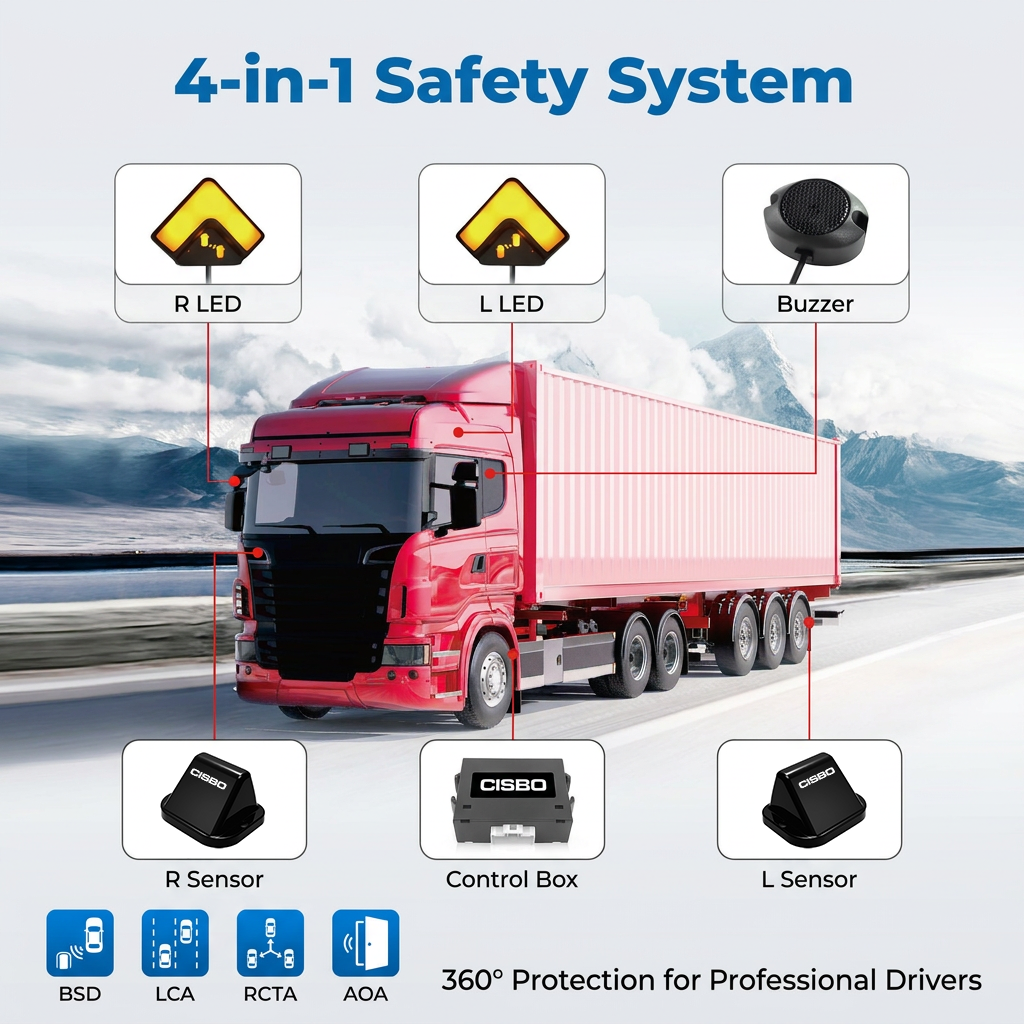
24GHz and 77GHz millimeter-wave radar are not "old vs. new replacement." They are two routes built for different operating scenarios. Each has its strengths, and each has its trade-offs.
Detection range is the difference between life and death. The C93 can detect targets up to 30 meters to the side and rear; the C52 reaches 15 meters. At 100 km/h, 30 meters gives you roughly a 1-second reaction window — 15 meters gives you less than 0.6. For fleets running long-haul at highway speeds, that one second can be the line between an accident and a safe trip.
Beam angle determines the size of the blind zone. The C93's 120° beam can simultaneously monitor the adjacent lane and approaching traffic from behind; the C52's 52° is more focused on the lateral blind spot. Vehicles that stop-and-go in the city and change lanes frequently need that "wider eye."
Environmental resilience tests the extremes. The C93 handles -40°C to +85°C — stable from Nordic winters to Middle Eastern summers; the C52 operates at -30°C to +70°C, better suited to temperate and tropical climates like South America and Australia.
Power consumption and cost are the practical considerations. The C52 draws only 180 mA rated current, with mature technology and lower material costs — friendlier for budget-sensitive fleets that primarily operate at low to medium speeds.
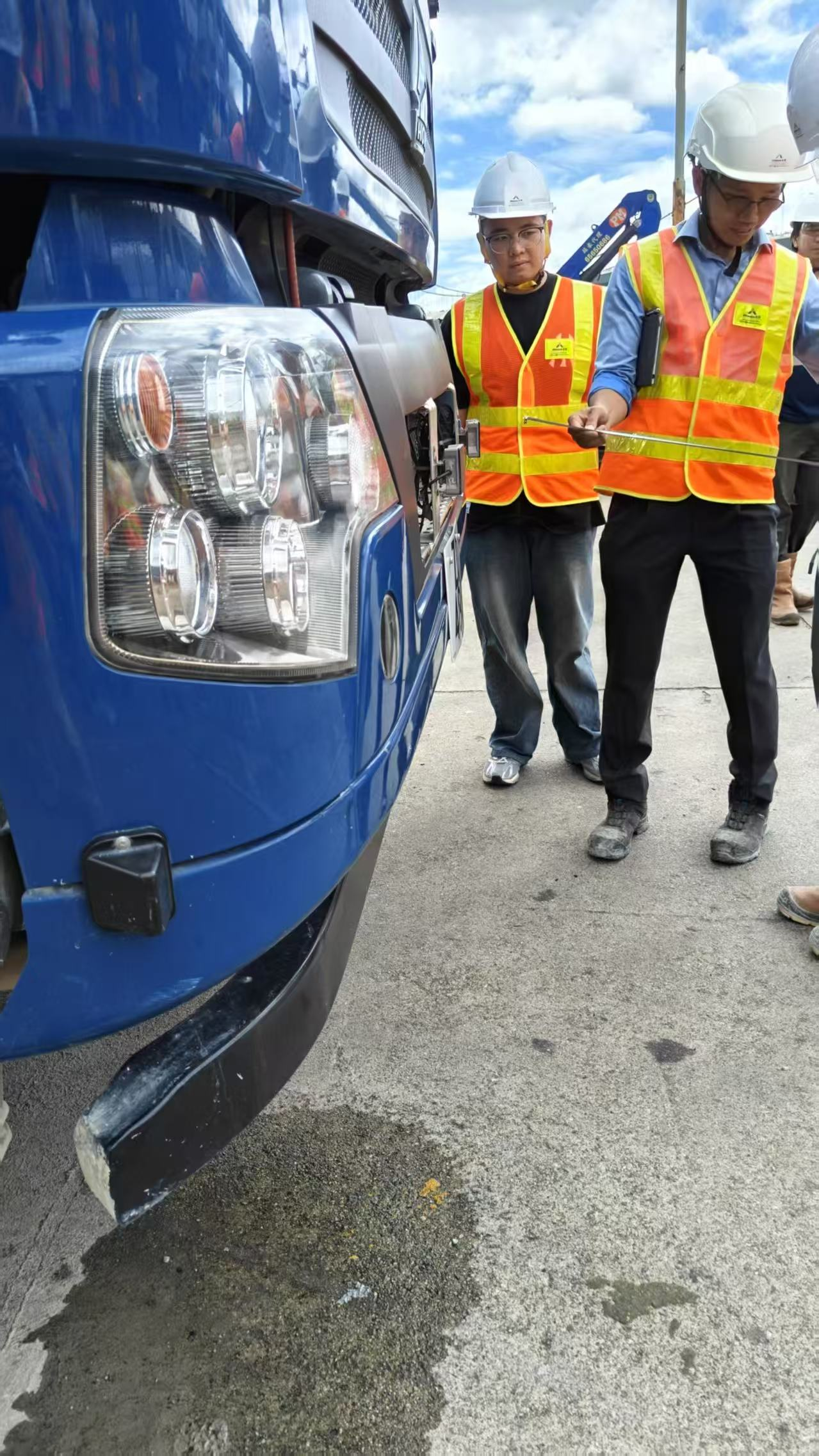
In April 2023, a Hong Kong fleet owner found me at the HKTDC booth and told me about a recent experience. His fleet had nearly a thousand vehicles (including concrete mixer trucks, heavy trucks, etc.), and they had just had an accident. He was facing a hefty insurance claim and was under a lot of pressure. Mixer trucks have long bodies and large turning radiuses — weaving between construction sites and city streets, the blind spots are especially dangerous. That was why they decided to find and install a BSD system.
Initially, we recommended the C52. At the time, his fleet was mostly urban and construction-site short-haul — low to medium speed, stop-and-go. 24GHz was sufficient, and the cost was more controllable. After installation, accident claims dropped noticeably.
By 2024, his fleet had purchased a batch of new vehicles, and the demand for detection range increased. So we helped him upgrade to the C93, extending the detection range from 15 meters to 30 meters.
Over three years, his fleet hasn't had a single accident claim. He later told me: "If I had gone straight for the expensive one from the start, it would've been a waste. By taking it step by step, every penny was spent where it mattered most." Despite spending money on BSD, the fleet operates more safely, insurance premiums dropped significantly — in the end, it saved money.
If you haven't installed one yet, we recommend you do; if you've decided to install, look at your budget and scenarios; then decide which model.
Choose 24GHz (C52): Mining transport, agricultural transport, road trains in South America and Australia — scenarios with heavy dust, strong vibration, and primarily low to medium speeds; limited budget, low highway proportion.
Choose 77GHz (C93): High-speed long-haul transport in Europe and North America, with strict regulatory requirements; need CE RED certification to enter the EU market; large temperature variation across operating areas; higher demands on detection range and beam coverage.
Summary: The higher the speed, the wider the temperature range, and the stricter the regulations — choose 77GHz; the heavier the dust, the stronger the vibration, and the tighter the budget — 24GHz offers better value.
First figure out what kind of roads your fleet runs on every day, then decide which radar to choose. Choose right, and this investment becomes genuine safety protection. Currently, both the C52 and C93 are in mass production and have been validated by customers in the field.
Published: August 2026 | Author: CISBO Engineering Team — 23 years of commercial vehicle safety system manufacturing, IATF 16949 certified, Shenzhen, China. www.szcisbo.com
Shenzhen CISBO Technology Co., Ltd. specializes in automotive electronic products including BSD, PWAS, AI monitoring, parking sensors, and rear view systems. With 23 years of experience and global certifications, we deliver high-quality solutions for safer driving. Explore our products and services today.
6F, Building 3, Lijincheng Industry Park, Gongye East Road, Longhua, Longhua New District, Shenzhen, 518109, China
Copyright © 2026 Shenzhen CISBO Technology Co., LTD. All rights reserved. Privacy Policy 粤ICP备:05005734号